Welcome to CLPHA's Press Room
CLPHA experts welcome interview requests from print, radio, television, and online reporters and are happy to provide their insights on issues of public housing and related legislation and policy.
For media inquiries, please contact:
David Greer
Director of Communications
(202) 550-1381 or [email protected].
*Please let us know if you are working on deadline.
To view all of CLPHA's press releases, click here.
To view all of CLPHA's press statements, click here.
You can subscribe here to our biweekly newsletter, events invite list, and topic specific newsletters. You can also follow us on Twitter at @CLPHA. Or, send us an email with your interests and we would be happy to add you to our press lists.
Thanks again for your interest in CLPHA!
Announcing the New CLPHA.org

(WASHINGTON) January 7, 2019 - The Council of Large Public Housing Authorities (CLPHA) is pleased to announce the launch of our newly-redesigned website.
The new CLPHA.org showcases our member PHAs and offers industry news and updates with a bright, modern look and dynamic, user-friendly content that is easy to navigate on a desktop computer or a mobile device.
DYNAMIC: A carousel of stories and the latest news on the front page keeps the content fresh. CLPHA.org is a website to bookmark and visit regularly.
INFORMATIONAL: At the new CLPHA.org, you will find articles and information about the latest developments on Capitol Hill and from HUD, facts and updates about programs important to public and affordable housing, and news from CLPHA about our work on behalf of our members.
USER-FRIENDLY: The new CLPHA.org features sections on each of CLPHA's priorities: Public Housing, Housing Choice Vouchers, Moving to Work, RAD, and our cross-sector initiative Housing Is. Plus, dedicated sections for Legislation & Policy, Press, News & Events, and Membership.
###
About the Council of Large Public Housing Authorities
The Council of Large Public Housing Authorities is a national non-profit organization that works to preserve and improve public and affordable housing through advocacy, research, policy analysis and public education.
Experts to Present First National Snapshot of Health Partnerships in Public Housing
Free Webinar Aug. 29, 12 PM ET
WASHINGTON (August 28, 2018) - Half of the nation’s public housing authorities (PHAs) are engaged in a resident health initiative, most with a health organization partner according to Health Starts at Home: A National Snapshot of Public Housing Authorities' Health Partnerships, the latest report released by the Council of Large Public Housing Authorities (CLPHA) and the Public and Affordable Housing Research Corporation (PAHRC). The report provides the first national snapshot of PHA efforts to address residents’ health care needs and emphasizes opportunities for collaboration between the health and housing sectors.
Report authors Steve Lucas, MPH, CLPHA Health Research and Policy Manger for the Housing Is Initiative, Keely Stater, PHD, PAHRC Director of Research and Industry Intelligence, and Kelly McElwain, PAHRC Research Analyst III, will present their analysis during a free webinar on August 29, 2018 at 12:00 PM ET.
“Housing and health systems need to work together,” said Lucas, who designed and implemented the original survey that led to the report. “Public housing authorities are significant providers of housing to those in need, offering the health sector scale and expertise. We found that PHAs across the country are engaged in a wide range of partnerships with different health organizations that address various target populations and health priorities. Though there are barriers to housing-health collaboration, such as funding and staffing capacity, these can be overcome with cross-system partnerships that seek to address these needs.”
Lucas published the initial survey findings in an issue of CityScape, a research publication of the U.S Department of Housing and Urban Development. The article, “Connecting Fragmented Systems: Public Housing Authority Partnerships with the Health Sector,” is posted to the HUD User website.
What: Free Webinar: Building PHA Health Initiatives and Cross-Sector Partnerships
When: Wednesday, August 29, 2018, 12:00 PM ET
WEBINAR RECORDING: https://www.youtube.com/watch?v=E5-jm5eF_YU&t=24s
Webinar Presenters
Steve Lucas, MPH
Health Research and Policy Manager, Housing Is Initiative,
Council of Large Public Housing Authorities
Keely Stater, PhD
Director of Research and Industry Intelligence,
Public and Affordable Housing Research Corporation,
HAI Group's Research Division
Kelly McElwain
Research Analyst III,
Public and Affordable Housing Research Corporation,
HAI Group's Research Division
###
About the Council of Large Public Housing Authorities
The Council of Large Public Housing Authorities is a national non-profit organization that works to preserve and improve public and affordable housing through advocacy, research, policy analysis and public education. CLPHA’s 70 members represent virtually every major metropolitan area in the country. Together they manage 40 percent of the nation’s public housing program; administer 26 percent of the Housing Choice Voucher program; and operate a wide array of other housing programs. Learn more at clpha.org and on Twitter @CLPHA.
About Housing Is
CLPHA’s Housing Is Initiative helps establish, broaden, and deepen efforts to align affordable housing, education, and health systems to produce positive, long-term results. We are building a future where systems work together to improve life outcomes for low-income people. Learn more at HousingIs.org and on Twitter @Housing_Is.
CLPHA Opposes Administration Proposal to Increase Rent Burden on Lowest-Income Residents
WASHINGTON (May 14, 2018) - The Council of Large Public Housing Authorities (CLPHA) strongly opposes the Department of Housing and Urban Development’s (HUD) recently announced proposal to increase rent burdens on low-income residents residing in public housing and assisted housing.
The core of HUD’s rent reform proposal is to shift the burden of chronic federal underfunding of assisted housing to low-income residents who can least afford it. While there are advantages to a proposal that simplifies rent calculations and reduces administrative burdens for public housing authorities (PHAs), this proposal requires that PHAs raise rents in order to benefit from common sense rent simplification. Even with the benefit of housing assistance, many public housing residents are already spending more than 30% of their income on rent. A 2017 HUD study reported that the average Housing Choice Voucher recipient had a rent burden of 37% in 2015. Nationally, we represent PHAs serving residents in the most expensive housing markets in the country, where voucher holders are especially likely to have to incur high rent burdens to gain access to higher opportunity neighborhoods of their choice.
Given existing rent burdens, this proposal raises serious concerns about the negative impact the proposed rent calculations would have on residents. Through changes to 35% of unadjusted income for families and 30% of unadjusted income for the elderly and disabled, many assisted households would see significant rent increases. For example, the Housing Authority of the City of Los Angeles (HACLA) estimates that public housing residents would see an average 36% rent increase while Housing Choice Voucher households would experience an average 23% rent increase. With an average annual household income of $21,000 for public housing residents and $16,000 for voucher holders served by HACLA, these increases represent substantial burdens that may interfere with a household’s ability to afford other necessities.
Beyond concerns regarding the fairness of further cost-burdening residents, there is some evidence to suggest that increased rents do not financially benefit PHAs and may have the opposite effect. When the New York City Housing Authority (NYCHA) implemented a HUD-mandated flat rent increase in 2014, impacted residents experienced an average rent increase of 46%. NYCHA saw their rent collection rate decrease among those impacted by the increase. NYCHA’s experience reflects the reality that increased rent payments only exacerbates affordability issues and puts more residents at risk of delinquency and eviction, resulting in more challenges for PHAs and less predictable revenue.
In addition to our concerns about the impacts of the proposed rent calculations, we note that the timing of these proposed changes are problematic for two reasons. First, some components of the proposal contradict important changes to housing assistance made through the recent federally enacted Housing Opportunity Through Modernization Act (HOTMA) in 2016 by unanimous vote of the House and Senate. HUD has yet to publish implementation regulations for some of the key provisions in the bill. For example, HOTMA increased the deduction of medical expenses for elderly and disabled families and tied the deduction to inflation, while HUD’s proposal eliminates these deductions entirely. A significant number of elderly and disabled households currently use medical deductions, many of whom have substantial medical costs. We question the elimination of this deduction particularly when it is already undergoing a very different set of changes through congressionally-mandated HOTMA.
We also question the timing of these proposed changes given the fact that in 2012, HUD commissioned a four-site demonstration from MDRC to study several rent reform elements included in the proposal, including triennial recertification, elimination of income deductions, and ignorable asset limits. One of the research questions the demonstration is explicitly testing is whether these reforms reduce work disincentives and increase family self-sufficiency among families receiving vouchers. With results expected in 2019, HUD should use insights from the study to inform design of a rent reform model that most effectively promotes self-sufficiency.
###
About the Council of Large Public Housing Authorities
CLPHA, headquartered in Washington, D.C., is a non-profit organization working to preserve and improve public and affordable housing through advocacy, research, policy analysis and public education. It represents most of the nation’s largest public housing authorities.
|
(Washington, D.C.) June 17, 2021 – The nation's leading advocacy organizations representing public housing authorities have come together to support universal housing vouchers. The Council of Large Public Housing Authorities, the Moving to Work Collaborative, the National Association of Housing and Redevelopment Officials, and the Public Housing Authorities Directors Association have released the joint letter below:
"Safe, secure, and stable housing is as essential to America’s social safety net as are Social Security, Medicaid and Medicare. Housing stability is central to improving life outcomes and economic mobility for low-income Americans. However, only one in five low-income households that are eligible to receive housing assistance can be served by existing programs due to limited funding. The pandemic has reinforced that rental assistance, such as the Housing Choice Voucher (HCV) program, is critical to ensuring housing stability and managing sudden losses in income. Just as Social Security, Medicare and Medicaid are structured to be available to all who are eligible, rental assistance must be too. Expansion of the voucher program offers a proven and effective approach to scale universal housing assistance to address housing instability and prevent homelessness in America.
Housing Choice Vouchers are a proven source of permanent housing stability. They are highly effective at providing long-term financial stability to formerly homeless populations and others experiencing housing instability. A recent HUD study found that offering families a permanent housing voucher resulted in greater housing and family stability compared to short-term interventions. Furthermore, a recent study from Columbia University found that expanding housing vouchers to all eligible households could help reduce poverty by 9.3 million people as well as reduce racial disparities in poverty. Vouchers are also frequently paired with supportive services to offer comprehensive assistance to individuals with complex mental and physical health conditions. Public housing authorities are uniquely positioned to aid low-income families in their challenges to regain employment and support children’s virtual learning because of their partnerships with nonprofit and government service providers that focus on education, health, and employment. Harvard’s Joint Center for Housing Studies recently reported on the critical role that service coordinators in publicly funded housing have played in providing food and supplies, assisting with technology, and combatting resident anxiety and loneliness. Housing Choice Vouchers are a proven and effective rental assistance delivery system to scale universal housing assistance because they can be quickly distributed through the existing network of 2,200 state and local housing agencies that administer vouchers in urban, suburban, and rural areas. Housing authorities are trusted experts and partners in their local rental markets, have been administering the voucher program for nearly 50 years and are accountable to local and federal oversight and operate with significant public input. With the proper funding, housing authorities have the capacity for a rapid expansion. Housing vouchers power local communities. Landlords, many of whom operate as a small business, understand that the voucher program is a guaranteed, reliable income source and provides the benefit of long-term stability. PHAs have been using the additional funding and regulatory relief provided by the Coronavirus Aid, Relief, and Economic Security (CARES) Act to expedite administrative processes most often cited by landlords as reasons for preferring unassisted tenants. With this funding, PHAs have also been able to offer incentives and support to increase landlord participation in the HCV program. We must strive to be a nation that believes that all people deserve the security that comes from having a home. Housing Choice Vouchers are the path to achieving this vision." |
|
||||||
|
|||||||
|
|
||
|
About the Council of Large Public Housing Authorities
About CLPHA’s Housing Is Initiative |
||
|
(202) 550-1381
For Immediate Release
May 11, 2021 |
|
|
(Washington, D.C.) May 11, 2021 – CLPHA Executive Director Sunia Zaterman released the following statement supporting the New York City Housing Authority’s call to double the public housing infrastructure investment proposed in the American Jobs Plan to $80 billion:
“The Council of Large Public Housing Authorities urges the Senate Majority Leader to stand firm on his call to double the public housing infrastructure investment in the American Jobs Plan to $80 billion in his meeting today with President Biden, Speaker Pelosi and GOP leadership.
“The New York City Housing Authority deserves its fair share of Senator Schumer’s request since it serves nearly double the amount of residents than any other housing authority, and its housing portfolio is among the oldest in the nation. Decades of chronic disinvestment has driven its unmet capital repairs alone to $40 billion. The $80 billion request enjoys critical support from Congresswoman Nydia Valezquez (D-NY) and the NYC-area Congressional delegation. This investment would also be a significant step to addressing racial inequity, a key priority of the Biden administration.
“As the American Jobs Plan moves through the legislative process, political leaders must guarantee that housing will remain in the infrastructure bill and that the commitment to recapitalize public housing infrastructure be doubled to $80 billion so that the needs of NYCHA and public housing portfolios across the nation are adequately met.”
|
|
|
|
|
||
|
|
||
|
About the Council of Large Public Housing Authorities
About CLPHA’s Housing Is Initiative |
|
|
April 28, 2021
|
(Washington, D.C.) April 28, 2021 – CLPHA Executive Director Sunia Zaterman released the following statement in response to President's Biden's joint address to Congress tonight to mark his first 100 days in office:
"President Biden’s commitment to investing in our nation’s future through the American Jobs Plan and the American Families Plan, which was released tonight, has the potential to lift the lives of more than 2 million families living in our nation’s public and affordable housing. The American Jobs Plan improves the lives of public housing residents through a $40 billion commitment to retrofit and rebuild public housing properties to 21st century codes and standards.
"The American Families Plan improves the lives of public housing residents by expanding access to quality pre-school, direct support to children and families through child care, and investing of the childcare workforce, of which many public housing residents are employed. Because public housing residents are often employed in low-wage positions that do not offer paid leave they will be among the many beneficiaries of the national comprehensive paid family and medical leave program in the Families Plan.
"Public housing has always been about more than buildings. It is about the hopes and dreams of millions of Americans. The combination of the American Jobs Plan and American Families Plan is a powerful offer to make those dreams a reality."
|
|
|
|
|
||
|
|
||
|
About the Council of Large Public Housing Authorities
About CLPHA’s Housing Is Initiative |
||
The Housing Authority of the City of Los Angeles alongside partner Meta Housing Corporation, opened El Segundo Apartments and 127th Street Apartments in Harbor Gateway, two new communities offering a combined 160 units of permanent supportive housing for formerly homeless families and individuals.
The Housing Authority of the City of Los Angeles (HACLA), partner Red Eye, Inc., and celebrity guests celebrated the opening of the Watts Empowerment Center Sports Complex at HACLA’s Imperial Courts community with basketball games, soccer matches, a slam dunk contest, and other activities.
Fort Worth Housing Solutions (FWHS)President Mary-Margaret Lemons penned an op-ed in the Fort Worth Star-Telegram about FWHS’s efforts to increase the city’s affordable housing options, such as their utilization of the RAD program.
The District of Columbia Housing Authority (DCHA) and partners cut the ribbon on the Residences at Hayes Street, a 150-unit affordable housing community constructed with help from a $2 million DCHA loan. DCHA will also provide nearly $241,000 annually in rent subsidies to residents.
The Charlotte Housing Authority has opened The Oaks at Cherry, an 81-unit affordable housing community with resident amenities such a playground, cyber café, and fitness center in Charlotte’s historic Cherry neighborhood. You can watch a video about The Oaks at Cherry community here.
From the Cuyahoga Metropolitan Housing Authority's newsletter:
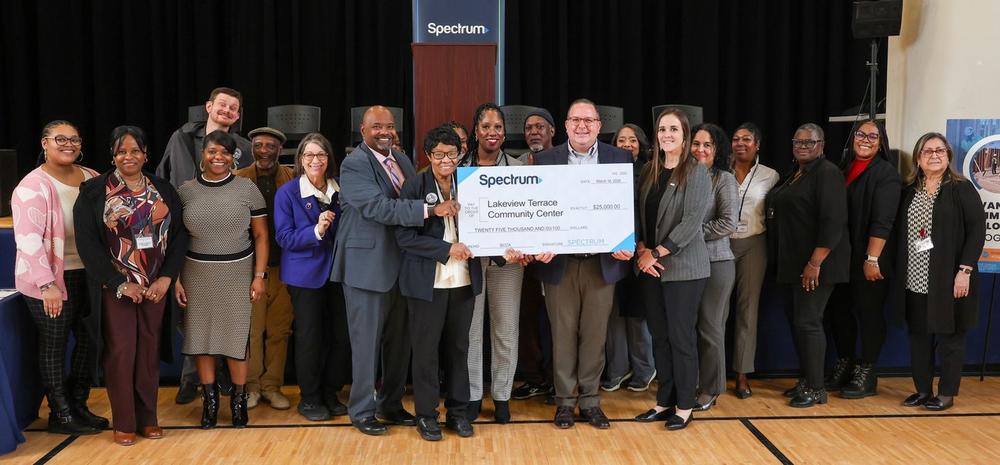
Spectrum announced the Cuyahoga Metropolitan Housing Authority (CMHA) received an additional $25,000 toward its workforce development program through Spectrum Community Center Assist (SCCA), the company’s philanthropic initiative to revitalize local community centers and invest in job training programs in underserved rural and urban neighborhoods where Spectrum operates.
Over the past four years, Spectrum has provided a total of $157,000 to support the organization’s efforts.
“Through Spectrum’s investment in the community, we’re creating real pathways to economic mobility for individuals across Cleveland,” said Jeffery K. Patterson, CEO and Safety Director of CMHA. In 2025 alone, over 600 individuals advanced their employment goals through CMHA’s workforce development initiatives at Lakeview Community Center, gaining direct access to employers through job fairs, target skills workshops, and personalized digital support. “Each successful hire brings greater stability to families and lays a foundation for lasting success. When families thrive, the entire community rises with them,” Patterson added.
The partnership launched in 2022 when Spectrum employees and community volunteers helped make repairs and improvements to CMHA’s Lakeview Community Center. Spectrum also provided Chromebooks, a Smartboard, and its advances 1-gigabit-per-second internet service for the organization’s new Spectrum Training & Technology Center. Strategic partnerships, including the “Next Steps to Employment” workshop series and the Cleveland Clinic Workforce Program, amplified this impact by providing practical job placement skills and individualized guidance. Complementing these efforts, an on-site Digital Navigator offered one-on-one tech support to residents for career searches and online readiness.
Patricia Wells, Executive Director of the Oakland Housing Authority, and Mark Gillett, Executive Director of the Oklahoma City Housing Authority, Elected to CLPHA’s Board
CLPHA is pleased to announce the election of two new board members: Patricia Wells, Executive Director of the Oakland Housing Authority, and Mark Gillett, Executive Director of the Oklahoma City Housing Authority. These two new members were elected at CLPHA’s Spring 2026 Board Meeting, held March 18, 2026, in Washington, D.C.
Wells and Gillett bring more than 50 years combined in public housing authority leadership to the board. CLPHA thanks Ms. Wells and Mr. Gillett for volunteering their time and expertise to the stewardship of our organization and looks forward to continuing our work with them to protect and expand affordable housing opportunities for low-income families across the country.
From the Minneapolis Public Housing Authority's website:
Every day, MPHA helps provide stable, affordable housing to more than 26,000 people. But the agency’s impact goes beyond just residents and program participants—MPHA invests millions in the local economy annually through contracted projects and services. In 2025, MPHA paid out $142,710,556 in contracts to local landlords, construction companies, security firms, and social service providers.
“MPHA is a key infrastructure in the city of Minneapolis—both for the people it helps house and for its investment in the local economy,” said Abdi Warsame, Executive Director/CEO of the Minneapolis Public Housing Authority. “MPHA maintained thousands of homes, hundreds of jobs, and invested more than one hundred and forty million dollars in our community last year. I am proud of the incredible work our team does every day to make our community better, and I look forward to MPHA continuing to increase its investments in the years ahead.”
The largest portion of MPHA’s investment in the Twin Cities economy comes from administering nearly 7,500 Housing Choice Vouchers (HCV). Through MPHA’s vouchers, the agency provides participants with a rental subsidy and partners with landlords and affordable housing developers in the private rental market. Last year, the agency allocated more than $83 million in Housing Assistance Payments to local landlords on behalf of nearly 20,000 people who benefit from vouchers in Minneapolis.
With the agency’s capital backlog estimated at more than $290 million, MPHA completes substantial construction and renovation work every year. For the most complex projects, MPHA routinely contracts with local construction companies to supplement the work of its own in-house team of skilled maintenance and tradespeople. Last year, the agency broke ground on the largest public housing redevelopment in city history, Spring Manor. Other recent examples include $20 million in high-rise capital repairs and major exterior enveloping renovations at 65 scattered site family homes. In 2025, MPHA spent nearly $50 million with local contractors on the agency’s various construction projects.
Other major investments include security and social services, which are routinely listed as MPHA residents’ top priorities in annual budget conversations. MPHA spends several million dollars every year on security and social services across its high-rise buildings and family housing portfolio. The agency leverages security personnel, property gates, secure building access, and more to ensure its buildings are secure. Last year, the agency spent more than $5 million on security services.
To bring social services and community resources to residents, MPHA has a long-standing partnership with Volunteers of America (VOA). The services VOA team members deliver include helping residents through case management, health screenings and education, and referrals for additional support (food, health, etc.). In recent years, MPHA has seen the need for these services increase significantly. In response, MPHA has increased its VOA funding to nearly $1 million a year. This is part of a larger $3.5 million allocated to local partnered social service providers in 2025. In addition to the social services provided by VOA, MPHA contracts community and resident council support through Minneapolis Highrise Representative Council, housing stabilization support through Stable Homes Stable School, and more.
Helping provide housing to more than 26,000 people, MPHA is a key infrastructure in the City of Minneapolis and Twin Cities region. And with recent one-time and ongoing investments in MPHA by state and local leaders, the agency is poised to continue to expand its investments in the years ahead.
From the Tacoma Housing Authority's press release:
Tacoma Housing Authority (THA) and its nonprofit subsidiary, Tacoma Housing Development Group (THDG), announced an $80,000 grant from Virginia Mason Franciscan Health (VMFH) to support the expansion of the Expanded Learning Opportunities (ELO) Project - a comprehensive initiative designed to advance academic success, social-emotional development, and mental health for young people living in THA communities. VMFH recently announced a commitment of $1.8 million to 29 local nonprofits, awarded through its 2026 Community Health Improvement Grants program; THA was among the 29 grant recipients.
The grant will help scale ELO’s proven summer enrichment model into year-round learning. During the 2026–2027 program year, ELO will expand from a five-week to an eight-week summer program and introduce after-school learning sessions for children and youth ages 5–18 across multiple THA properties.
Addressing Urgent Community Health and Education Needs
Youth living in low-income households often face systemic inequities, trauma, and limited access to safe, high-quality learning environments. The ELO Project aims to reduce these barriers through consistent exposure to caring adults, structured activities, supportive peer relationships, and opportunities for creativity and joy.
The ELO Project is a collaborative partnership between Tacoma Housing Authority, SOP Projects (Seeds of Peace), and Greentrike. Together, these organizations will serve more than 2,400 children and youth, focusing on those experiencing academic disengagement, social isolation, trauma, or behavioral and mental health challenges.
Programming will include:
- Social-emotional learning (SEL) skill building
- Mental health supports and wellness workshops
- Academic tutoring and enrichment
- STEM and arts activities
- Mentorship opportunities
- Physical activity and play based learning
THA will provide grant oversight and program management, ensuring success for its properties and residents. SOP Projects (Seeds of Peace) will lead SEL, conflict resolution, youth led coordination, and mental health awareness initiatives—including training youth leaders in Teen Mental Health First Aid. Greentrike will provide curriculum development, staff training, and support to ensure equitable, inclusive, and developmentally appropriate learning experiences.
“This investment allows us to provide year-round programming that strengthens emotional resilience, builds academic confidence, and nurtures the unique potential of young people in our communities,” said THA Executive Director April Black. “We are deeply grateful to Virginia Mason Franciscan Health for recognizing the importance of prevention-focused, community-rooted development for young people.”
The expanded ELO Project will help ensure that the program is fostering long-term wellbeing, reducing summer learning loss, and helping close opportunity gaps for THA youth.
From the Durham Housing Authority's press release:
The Board of Commissioners of the Housing Authority of the City of Durham ("DHA") announced today the retirement of Interim Chief Executive Officer, Anthony Snell, effective February 6, 2026. Mr. Snell has made the difficult decision to bring his career in the public sector to a close in order to return home and spend more time with his family.
Mr. Snell joined DHA in 2020. As its Director of Real Estate, he was the driving force behind the development of several high-profile affordable housing projects including JJ Henderson, The Joyce, 500 East Main, Elizabeth Street Apartments, Commerce Street Apartments, Dillard Street Apartments, Villages of Hayti, Tribute Rising, numerous public-private partnerships and many more. Additionally, Mr. Snell was instrumental in fostering a collaborative and impactful partnership between DHA and City of Durham in connection with the City's commitment to investing in the preservation and development of affordable housing.
Since December 2024, Mr. Snell has served as Interim Chief Executive Officer of DHA. During his tenure, Mr. Snell has strengthened both operational and financial stability at DHA. The Board extends its sincere appreciation to Mr. Snell for his outstanding dedication and leadership during his term of service with DHA.
The Board also announced both that it will begin a national search for the next permanent Chief Executive Officer and that Ashanti Brown will serve as Interim Chief Executive Officer during this transition period. Ms. Brown currently serves as DHA's Chief Operating Officer. She began her tenure at DHA in 2017 as the first Director of Strategic Management and has served as the Chief Operating Officer since 2024.
"I join my fellow Commissioners in congratulating Mr. Snell on an outstanding career at DHA and in the public sector," said Mayme Webb Bledsoe, Chair of the DHA Board of Commissioners. Mr. Snell's firm leadership and strategic vision have set DHA on a successful path into the future. We wish him well in his retirement."
"I want the citizens of Durham, particularly DHA residents, to know that my service here has been one of the highlights of my career," said Mr. Snell. I sincerely appreciated the support and guidance of the Board of Commissioners and the City of Durham, and the commitment of the DHA staff. I am confident that the progress made under my leadership will serve the Durham community well into the future."